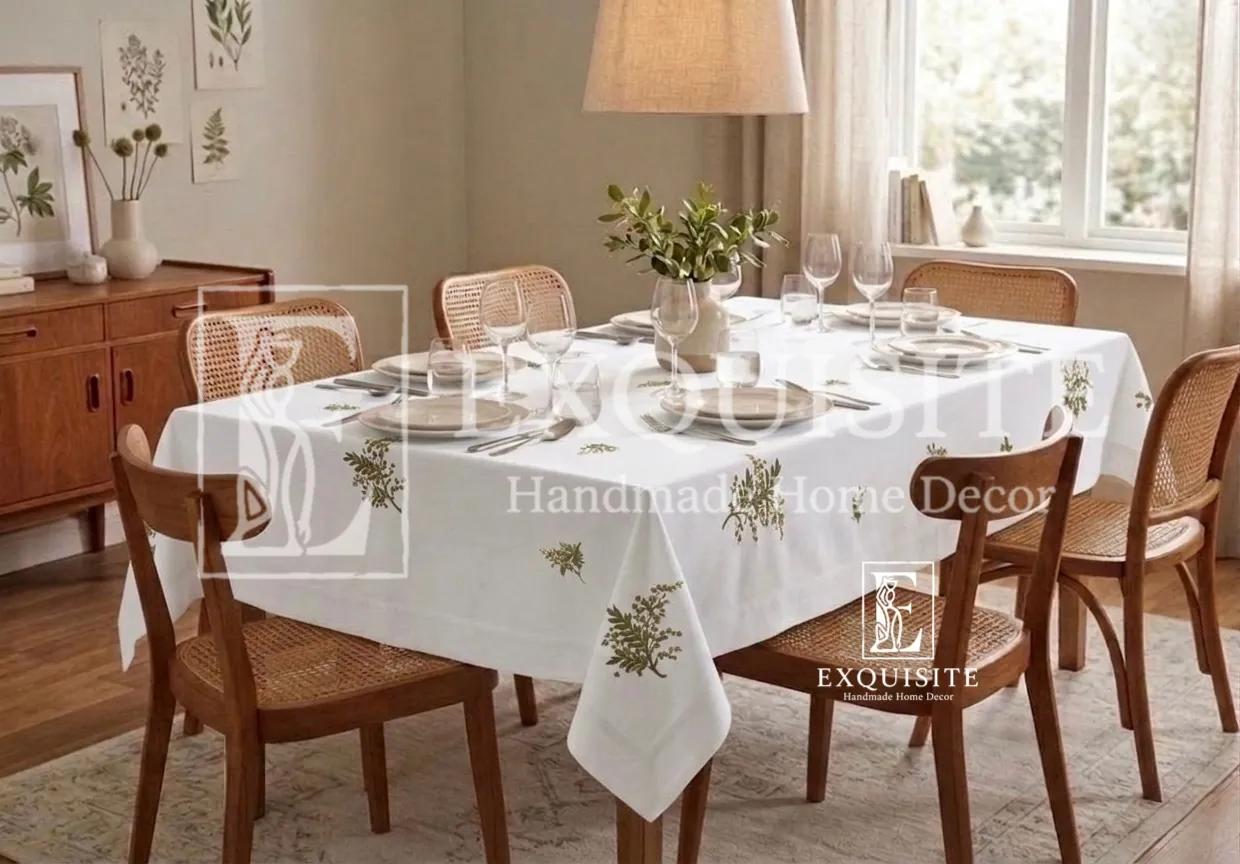
CARE, WASHING & STORAGE GUIDE
HAND-EMBROIDERED LINEN TABLECLOTH
Exquisite Handmade – Vietnamese Hand Embroidery Brand
A hand-embroidered tablecloth from Exquisite Handmade is not merely a decorative home accessory, but also the result of meticulous craftsmanship, patience, and the skilled hands of Vietnamese artisans.
Made from natural linen, every stitch is carefully handcrafted to create a beauty that is rustic, elegant, and enduring over time.
To keep your tablecloth beautiful, maintain its shape, and preserve the delicate embroidery for many years of use, please follow the care instructions below.
1. HOW TO USE
Gently place the tablecloth on the table and adjust it so that all edges are evenly positioned.
Avoid pulling or tugging the tablecloth when adjusting its position, especially around embroidered areas.
Do not place extremely hot objects directly onto the surface of the tablecloth. For hot pots, plates, or other heated items, we recommend using a protective trivet or heat-resistant mat.
Avoid prolonged contact with:
Grease and sauces.
Red wine, coffee, tea, and other dark-colored beverages.
Cosmetics or substances that may cause staining.
Sharp objects that could catch or pull the embroidery threads.
Important: If liquid is accidentally spilled onto the tablecloth, treat it as soon as possible. Use a clean cloth or soft tissue to gently blot the liquid. Do not rub the stain vigorously.
2. WASHING – RECOMMENDED METHOD
Hand Washing Is Preferred
For hand-embroidered linen, gentle hand washing is the method recommended by Exquisite Handmade to provide the best protection for both the linen fibers and the handcrafted embroidery.
Step 1 – Preparation
Use cool or lukewarm water.
The water temperature should be no higher than 30°C (86°F) for hand-embroidered products.
Fully dissolve a small amount of mild, pH-neutral laundry detergent in the water before placing the tablecloth into it.
Do not use:
Chlorine bleach.
Strong whitening agents.
Highly abrasive detergents.
Harsh cleaning chemicals.
Strong cleaning agents may affect both the linen fibers and the colors of the embroidery threads.
Step 2 – Gentle Washing
Place the tablecloth into the water and gently move it by hand.
For stained areas, gently work from the reverse side of the fabric.
Do not scrub vigorously, rub directly against the embroidery, or use a brush.
Do not soak the tablecloth for an extended period.
Step 3 – Rinsing
Rinse thoroughly with clean water until all detergent has been completely removed.
Do not twist or wring the tablecloth to remove excess water.
Instead, place the tablecloth between two clean towels and gently press to absorb excess moisture.
3. IF MACHINE WASHING
If machine washing is necessary, select:
Gentle / Delicate – Cold or Cool Water – Low Spin
Place the tablecloth inside a laundry mesh bag to reduce friction during washing.
Do not wash together with garments containing zippers, metal hooks, or sharp objects that could catch on the embroidery.
Dark-colored products should preferably be washed separately from light-colored items, especially during the first few washes.
Never use a heavy-duty wash cycle or high-speed spin.
For products with intricate or densely embroidered details, hand washing remains the safest option.
4. PROPER DRYING
After washing, gently reshape the tablecloth while it is still damp to restore it to its original form.
Dry it in a place that is:
Well ventilated.
Dry.
Shaded or exposed to gentle, indirect light.
Avoid prolonged exposure to strong direct sunlight, as UV rays may gradually fade the fabric and embroidery colors over time.
Do not wring or twist the tablecloth.
Do not leave the wet tablecloth inside the washing machine for an extended period after the cycle has finished.
Avoid high-temperature tumble drying, as excessive heat may cause linen to shrink and affect the stability of the product.
5. IRONING
Linen is a natural fabric, so light wrinkles are part of its inherent character and contribute to the natural beauty of linen.
If you would like the tablecloth to look smoother and more polished:
Ironing while the tablecloth is still slightly damp is ideal.
Turn the tablecloth inside out before ironing.
Use a temperature setting appropriate for linen.
Do not place the iron directly on embroidered areas for an extended period.
You may place a thin cotton cloth between the iron and the embroidery to protect the stitches.
In particular, do not iron directly on the front side of the embroidery, as heat and pressure may flatten the stitches or reduce their natural texture and dimension.
6. HOW TO TREAT STAINS
For fresh stains:
Blot – Do not rub.
Use a clean white cloth or soft tissue to gently blot the liquid as soon as the spill occurs.
Then gently clean the area with water and a mild detergent.
Do not use strong bleach or harsh chemicals on embroidered areas.
For stubborn or old stains, we recommend taking the product to a professional laundry service experienced in handling linen and hand-embroidered textiles, rather than attempting to remove the stain at home with strong chemicals.
7. STORAGE WHEN NOT IN USE
Before storing, make sure the tablecloth is completely clean and dry.
Fold the tablecloth gently along larger folds and avoid creating multiple small creases directly across embroidered areas.
Store it in a place that is:
Dry.
Well ventilated.
Away from direct sunlight.
Away from areas with high humidity.
Away from sharp objects.
Avoid storing the product in a sealed plastic bag for long periods, as trapped moisture may create conditions that encourage mold growth.
For long-term storage, we recommend using a cotton fabric bag or another breathable material.
Periodically take the tablecloth out, air it, inspect it, and change the folding position to help prevent permanent creases from forming.
8. AN IMPORTANT NOTE ABOUT HAND-EMBROIDERED PRODUCTS
Every product from Exquisite Handmade is created with hundreds, and sometimes thousands, of individual hand stitches.
Therefore, subtle variations in softness, the natural wrinkles of linen, or slight differences between individual stitches are distinctive characteristics of a handmade product, not product defects.
With proper use and care, linen becomes increasingly soft and develops an even more beautiful, natural character over time.
Treat your tablecloth gently – because every embroidered stitch carries the skill, patience, and time of a Vietnamese artisan.
EXQUISITE HANDMADE - VIETNAMESE HAND EMBROIDERY BRAND
Address: No. 7 Hang Trong Street; Hanoi; Vietnam
Web: exquisitehandmade.com
Fanpage: Exquisite Handmade Home Decor
Instagram: exquisitehandmade_hanoi